A potential customer discovers your business and clicks through to your website. Within seconds, they are deciding whether your business looks credible, whether you can solve their problem, and whether they should take the next step.
If the experience is slow, confusing, outdated or difficult to navigate, they may leave before you ever get the opportunity to speak with them.
Your products may be excellent. Your prices may be competitive. Your service may be reliable. But if your website creates uncertainty, you could be losing customers before the sales conversation even begins.
In the digital age, your website is often your customer’s first point of contact with your business. When that experience is disappointing, trust can be lost before it has a chance to develop. Many business owners assume they are losing customers because of competition or pricing. Here are 10 warning signs that your website could be losing customers without you realising it.
It Takes Too Long to Load
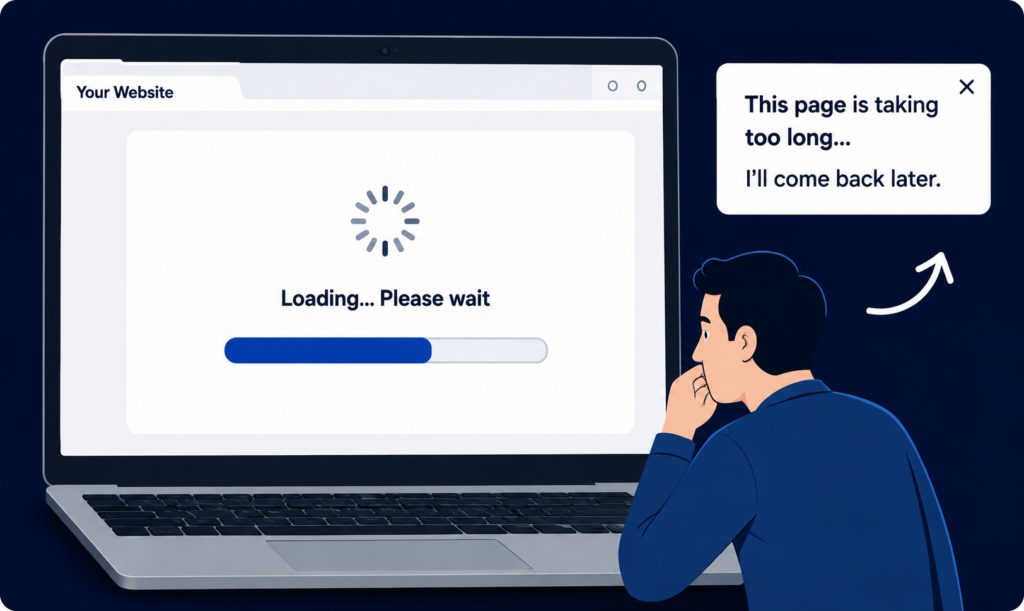
The first impression is important, and it is made by speed. Visitors expect web pages to load quickly. When they have to wait, frustration can build quickly. People press the back button, rather than being patient. Oversized images, stale hosting, needless plugins and suboptimal code are some of the main causes of slow loading.
It’s a question users rarely ask themselves: Why is my site so slow?
A slow website can make the business behind it feel less efficient or professional. You may only have a few seconds to make a good first impression. These seconds can be crucial, though, making the difference between a visitor and a customer.
It Looks Outdated
Design influences trust. The first impression of a Web page usually happens in a matter of seconds. Old layouts, blurry photographs, tiny fonts, poor colour combinations and broken graphics. These details can influence how visitors perceive the business, even before they consciously evaluate the information on the page. An outdated website can create the impression that your products, services or business practices are outdated too. Modern websites tend to prioritise clarity, simplicity and usability, clean layouts, readable typography, high-quality images, and clear navigation.
Successful design is not about impressing people. It is about making visitors feel confident enough to keep exploring.
It Doesn’t Work Well on Mobile
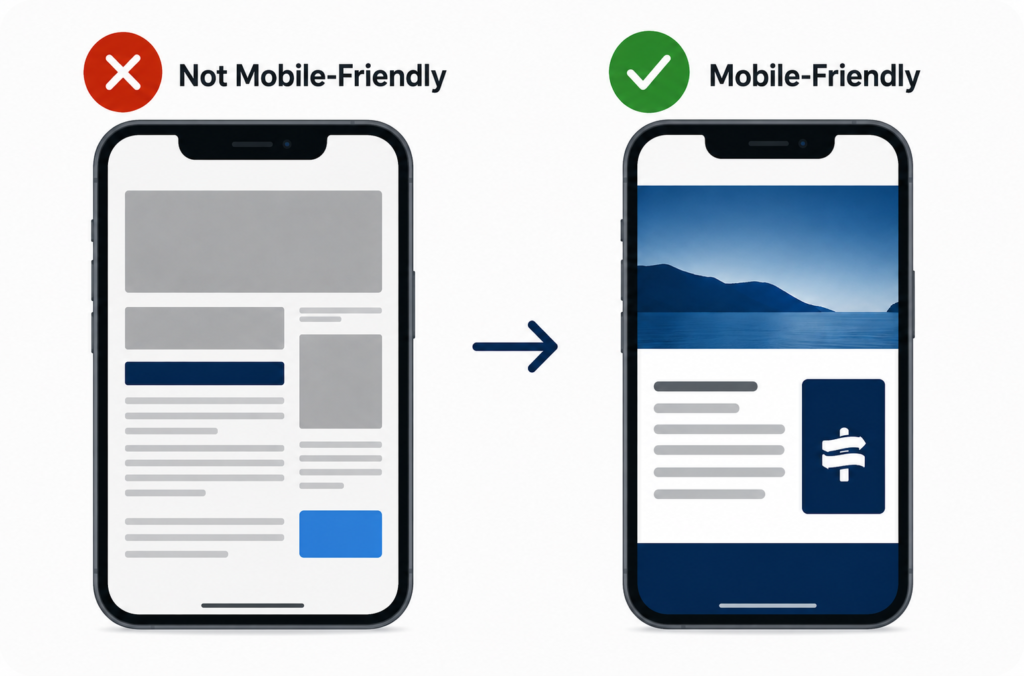
Many visitors will experience your website on a smartphone rather than a desktop computer. If visitors need to zoom in, scroll horizontally, or tap small buttons to navigate your website, the experience can quickly become frustrating.
A mobile-friendly website should adapt seamlessly to different screen sizes and remain easy to navigate on smartphones, tablets and desktops. Visitors should be able to browse and interact with your website easily, whether they are using a smartphone, tablet or desktop computer.
Convenience encourages engagement. Difficulty encourages exit.
Visitors Can’t Find What They Need
Visitors come to your website with a purpose. They may want to understand your product, compare services, check pricing, find a case study or contact your team. If they have to hunt for that information, frustration builds quickly.
Your Contact Information Is Hard to Find
Many businesses overlook one of the most valuable elements of their website: their contact information. It would be unacceptable to have to click several pages for a telephone number, email address, business address, or enquiry form. Making it easy to contact you builds confidence. Before making a purchase or enquiry, customers usually have questions they want answered.
The more difficult you make it for someone to contact you, the easier it becomes for them to contact a competitor instead.
There’s No Clear Next Step
People need some direction from time to time. Many visitors leave simply because they don’t know what to do next.
Would they ask for a sales quotation?
Book an appointment?
Download a brochure?
Call the business?
Send an email?
Purchase immediately?
A good website makes the next step obvious. Clickable buttons like ‘Book Now’, ‘Request a Quote ‘, ‘Contact Us’, or ‘Get Started’ guide visitors on the next steps to take. The fact is that it is never advisable to assume what customers are doing on a web page (Hokmabadi et al., 2024).
It should be a guide over their journey.
It Doesn’t Build Trust
Before spending money, people naturally want to feel confident about their decision. This is especially important when they are dealing with a company they have never worked with before.
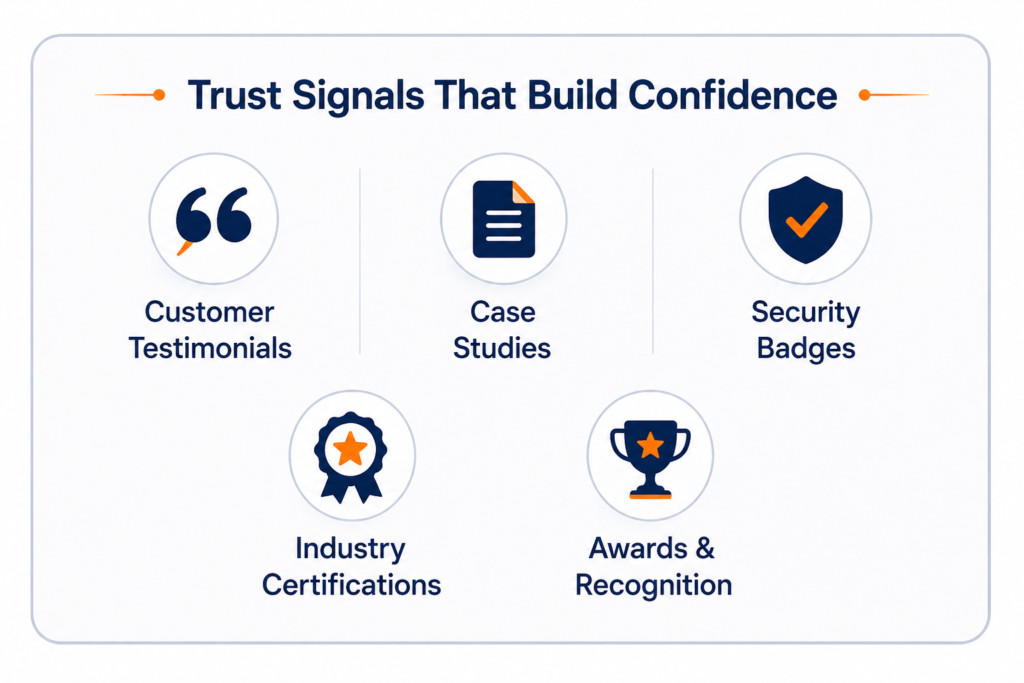
Trust signals minimise uncertainty. Customer reviews, testimonials, professional certifications, industry memberships, awards, case studies, secure payment badges and clear privacy policies. Together, these signals reassure visitors that your business is credible, established and trustworthy.
Your Content Is Outdated
Suppose that you find out that the newest information about a company is from four years ago. The business hours are incorrect. All products have been sold out. There have been staff changes. The site has several broken links.
It can leave visitors wondering: Has this business gone out of business?
Regular updates show visitors that the business is active and paying attention. Correct information reduces the time that it takes for both the customer and employees. New content also enables search engines to realise that the website is still beneficial.
Keeping your information accurate isn’t just maintenance. It’s part of good customer service.
You’re Attracting the Wrong Traffic
For a beautifully designed website, it is no use if nobody finds it. There are many businesses that invest funds in making their design beautiful without considering visibility. SEO is a crucial tool that can assist customers in finding the relevant businesses on the web. Accurate business information, helpful content, optimised page titles, fast performance, meaningful headings and quality backlinks, these factors help to make it more discoverable.
A website that isn’t visible in search has fewer opportunities to attract new customers organically.
You Don’t Measure What Happens
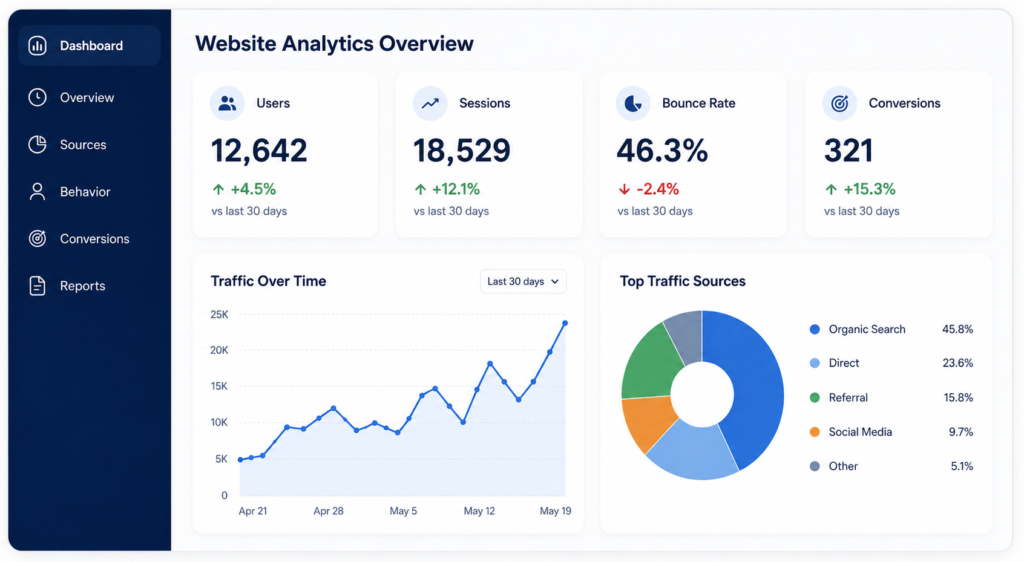
A lot of business people start a website and seldom look at how it performs later on.
Which Web pages generate the greatest number of views?
What do the customers do there?
Which pages attract the most visitors?
Where do visitors leave?
Which pages generate enquiries or conversions?
These are addressed by Analytics. Data is the proof of assumptions. Rather than an educated estimate on what the customers want, the company will be able to determine the patterns and make educated changes. Small changes can often make a meaningful difference. A successful website isn’t redesigned once every five years and then forgotten.
It improves continuously as customer needs, technology and business priorities change.
What Should You Do If Your Website Has These Problems?
Many companies believe that if they can redesign their website one time and in such a dramatic way, there is no need to do it again.
Actually, improvement can be a series of incremental changes.
- A faster homepage.
- Clearer navigation.
- Better photographs.
- Updated information.
- Simpler enquiry forms.
- Improved mobile experience.
Each improvement reduces friction for the visitor. All enhancements are aimed at creating confidence. The goal is simple: make it easier for visitors to stay, understand your offer and take the next step. Digital success is frequently more about getting things done, rather than doing things perfectly.
It is dependent on the elimination of hindrances.
Closing Reflection
Your website is always communicating, even when no one from your business is there to speak to a customer. It communicates quality, reliability, professionalism, attention to detail or the absence of them. Customers don’t owe you an explanation when they decide not to enquire. Their next step is simply to go to another website.
Another business.
Another solution.
The good news is that many of these problems can be fixed. Speed can improve. The design can be modernised. The navigation can be made easier. The content can be made clearer. Your website should not create barriers between your business and your customers. It should be a bridge, one that explains what you do, answers questions, builds confidence and makes the next step easy. It must works quietly, 24/7, helping your business attract, inform and convert the right visitors.